This article explores the critical gap between patient perception and physiological reality in swallowing disorders associated with Parkinson’s disease, drawing from both clinical experience and research. Northwestern University’s, Dr. Rabab Rangwala describes how dysphagia in Parkinson’s is often “silent,” with patients under-reporting difficulties despite clear signs of impairment observed by caregivers and instrumental assessments.
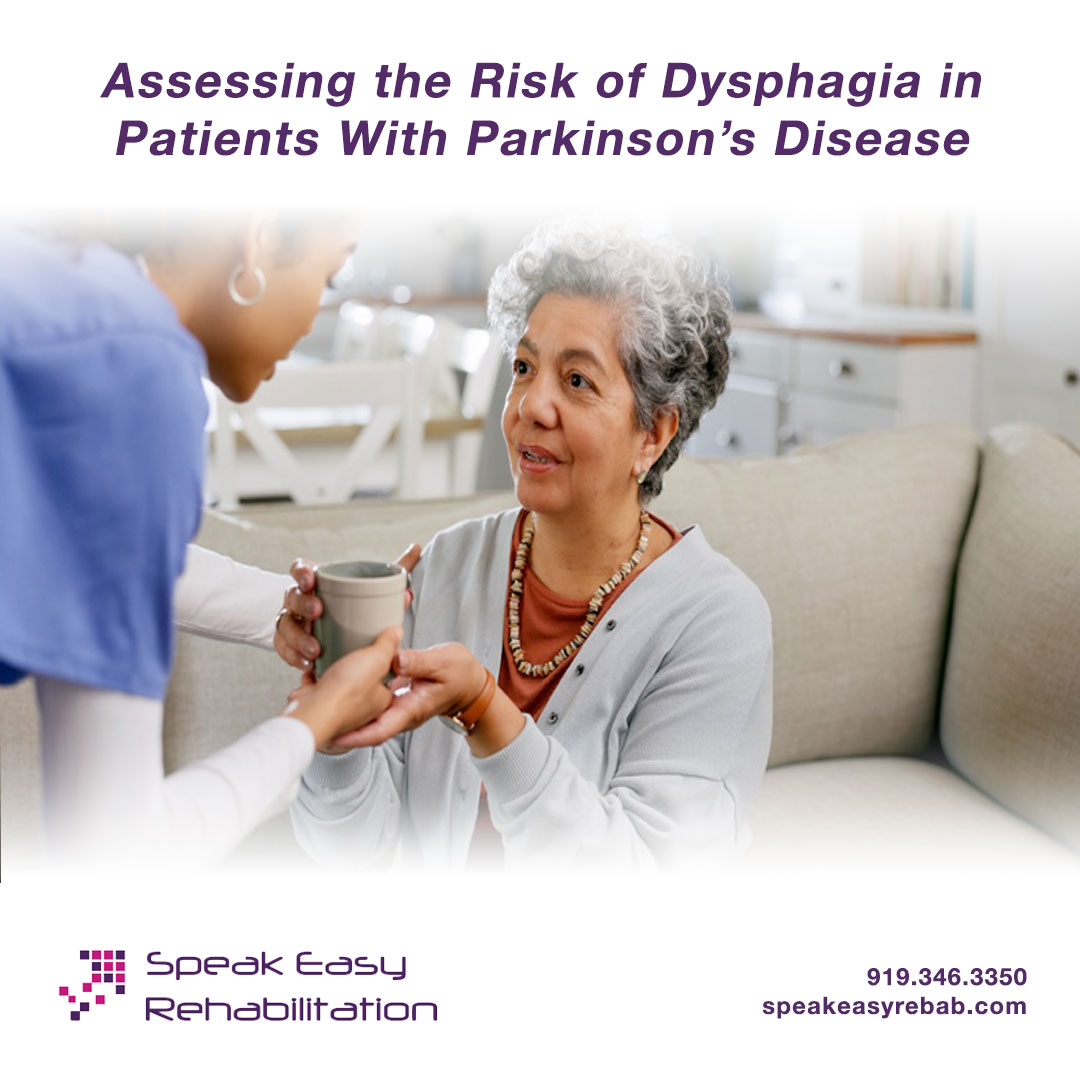
Research involving individuals with Parkinson’s disease confirms that patient self-ratings frequently fail to reflect the severity of swallowing dysfunction, in part due to sensory deficits, cognitive changes, disrupted breathing-swallowing coordination, and subtle compensatory behaviors. The article emphasizes that relying solely on either patient reports or objective data is insufficient; instead, effective dysphagia management requires integrating patient-reported outcomes, caregiver observations, and instrumental evaluations. By bridging perception and physiology through interdisciplinary collaboration and person-centered care, clinicians can better identify risk, prevent complications such as aspiration pneumonia, and preserve dignity, safety, and quality of life for individuals with Parkinson’s disease.
Do you know some one who could benefit from working with a speech pathologist? Then call Speak Easy Rehabilitation at 919.346.3350 to schedule. consultation. We can help!