Speech and language practice doesn’t always have to feel like therapy. Word games are a fun, engaging way to incorporate speech and language exercises into everyday activities while spending time with family and friends.
While not every word game requires players to speak, many can easily be adapted to target a variety of speech, language, and cognitive skills. Depending on an individual’s goals, a game can be used to practice everything from word finding and memory to vocabulary and speech production.
Build Language Skills with Classic Word Games
Games such as Boggle, Scrabble, and Bananagrams provide opportunities to work on important cognitive-language skills, including vocabulary, word finding, spelling, attention, and memory.
To add a speech component, try having players say each word aloud after creating it. Players can also practice putting their words into sentences or describing what the words mean. These simple additions can turn a familiar game into an opportunity to practice speech and language skills.
Encourage Conversation and Speech
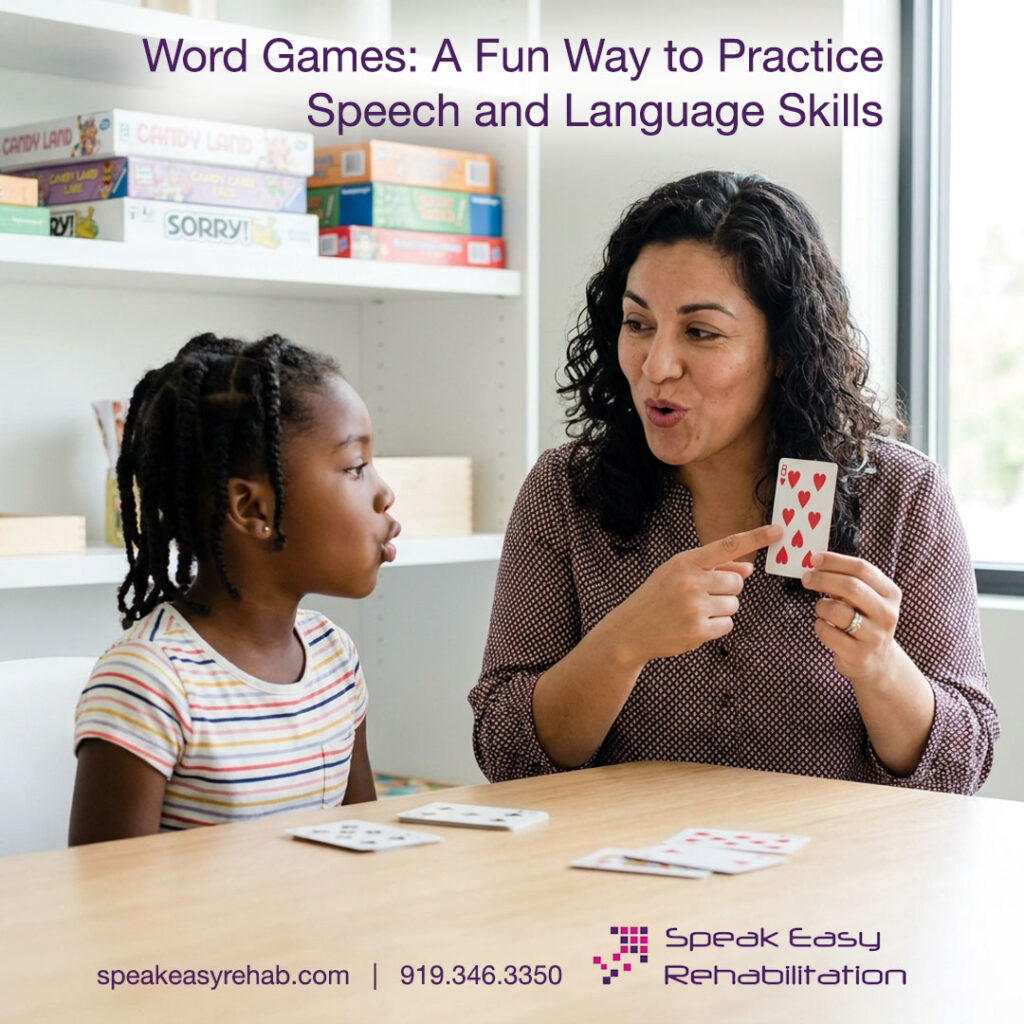
Games such as Pictionary, 20 Questions, and Go Fish naturally encourage communication and conversation. Players have opportunities to ask and answer questions, describe objects or pictures, follow directions, use vocabulary, and practice producing words and phrases.
For someone working on speech production, these games can provide a low-pressure way to practice targeted sounds or words repeatedly. The playful nature of the activity can also make practice feel more natural and motivating.
Independent Activities for Language Practice
Not every activity needs to involve another person. Word searches and crossword puzzles can be enjoyable independent activities that provide opportunities to work on vocabulary, word recognition, problem-solving, attention, and other language-related skills.
For an added challenge, try saying words aloud as they are found or solved, defining unfamiliar words, or using newly discovered words in a sentence.
Make Practice Fun and Meaningful
The key to using word games as part of speech and language practice is to choose activities that match the individual’s interests and abilities. A speech-language pathologist can help identify appropriate activities and suggest ways to adapt familiar games to support specific therapy goals.
With a little creativity, speech and language practice can become a fun part of everyday life—not just something that happens during a therapy session.
If you or a loved one could benefit from personalized speech, language, or cognitive-communication therapy, Speak Easy Rehabilitation is here to help. Contact Speak Easy Rehabilitation at 919.346.3350 or visit speakeasyrehab.com to schedule a consultation and learn more about how speech therapy can support your communication goals.
#SLP #SpeechTherapy ##LanguageDevelopment